
When “kindness” is the cruellest response
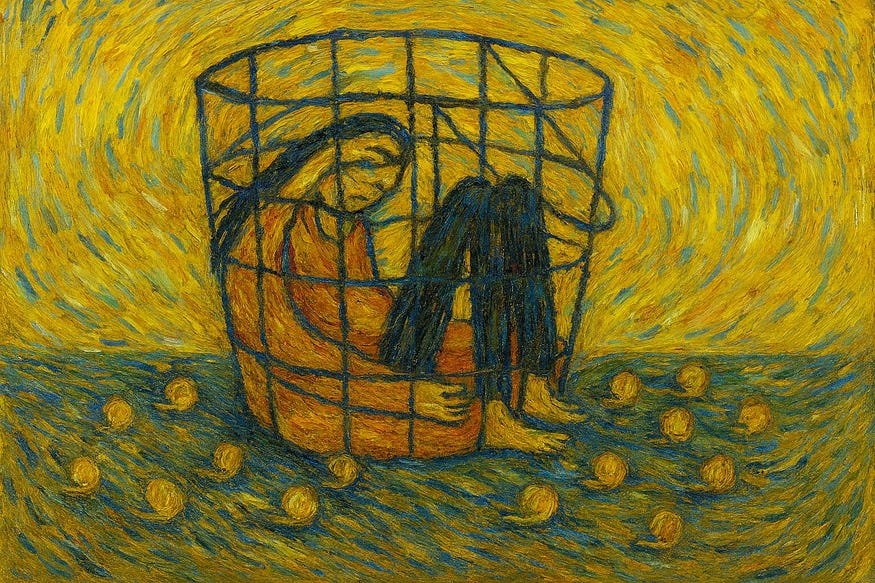
It has become a predictable ritual in contemporary intellectual life that any claim of recent human evolution, or population-level behavioural differentiation, is met with a swift denunciation. Few examples illustrate this reflex better than the reception of Cochran and Harpending’s The 10,000 Year Explosion. The book may be imperfect and at times speculative, but the vehemence with which many commentators insist it must be “wrong, foolish, dangerous, and unscientific” is striking. Their hostility is framed as moral vigilance, yet the social function of this vigilance is rarely examined. Why is it so important, for some, that the human mind has not changed in ten millennia? Why must all populations be cognitively identical, even as we readily accept striking differences in height, lactose tolerance, disease resistance, or metabolic traits?
The central tension is that the denial of cognitive or behavioural diversity is presented as compassion. It is meant to protect marginalised groups from stigma. Yet when examined through the lens of lived clinical realities — particularly the phenotype routinely observed in the ADHD and hypermobility clinics — it becomes clear that moralised sameness can function as an instrument of exclusion. A refusal to name real variation does not make systems fairer. It simply ensures they remain keyed to the traits of the most structurally protected.
The ADHD phenotype as an empirical counterexample
The clearest real-world example of an inherited neurocognitive profile that is systematically disadvantaged by modern institutions is the ADHD phenotype. The cluster is highly heritable, longstanding, and recognisable across cultures; it includes distinctive attentional patterns, a semantic/visual thinking style, and a measurable bottleneck in linear, word-based language processing. Individuals with this phenotype are not impaired in intelligence, but they are penalised in environments in which competence is measured through prolonged written output, narrow linguistic bandwidth, passive listening, and compliance with static routines.
These disadvantages are not theoretical. They are lived, daily realities. They manifest in school exclusion rates, literacy gaps, missed academic milestones, and recurrent patterns of shame, avoidance and exhaustion. They are visible in the criminal justice system, in substance-use populations, and in the disproportionate neurodivergent burden borne by communities facing socioeconomic adversity. If anything qualifies as a robust human phenotype — stable, heritable, behaviourally coherent — it is this one.
And yet, because acknowledging such variation is culturally fraught, individuals are often told that the difficulty is not cognitive style but moral failing: laziness, lack of discipline, poor choices, insufficient effort. What cannot be spoken of in population terms gets re-described as personal defect. The result is a world in which “we are all the same” becomes indistinguishable from “if you fail this system, it is your fault”.
The quiet part out loud: stimulant medication and the ADHD language translation bottleneck
Any discussion of cognitive variation — and the political stakes of acknowledging it — is incomplete without addressing the single most neglected fact in modern psychiatry: stimulant medication uniquely and dramatically improves language processing in ADHD. This phenomenon is almost absent from mainstream medical discourse and yet is the daily clinical reality in every ADHD clinic with lived experience embedded in its practice. It explains why ADHD is, paradoxically, one of the most treatable cognitive phenotypes, and why stigma, fear and prohibition around stimulants have such far-reaching and inequitable effects.
The ADHD phenotype is not defined by poor intelligence; it is defined by a mismatch between a semantic-first, visual, associative form of thinking and a modern world built entirely around linear, prolonged, word-based processing. The bottleneck is not motivation. It is translation. And the single intervention that reliably widens that bottleneck — often within minutes — is stimulant medication.
The fact that this effect is barely mentioned in guidelines, training, NICE documents or public discourse is extraordinary. For families searching for help, the language-processing deficit is usually described as behavioural avoidance, oppositionality, “inattention”, or noncompliance. Treatment pathways focus on speech therapy, behavioural programmes, diet modifications, visual timetables, “structure”, or parental boundaries. None of these resolves the fundamental problem: the neural machinery that converts meaning into language and language into comprehension is effortful, fragile, and easily overwhelmed.
It is difficult to overstate the transformation when this bottleneck is relieved. I know this because of my eldest son. Diagnosed with autism at three, excluded from learning by a language-processing barrier that none of the recommended therapies could budge.
It took years — even as a doctor — for me to uncover a whisper in the literature suggesting that stimulants might improve receptive and expressive language. When I eventually gave him his first Ritalin tablet at age eleven, he came home from school on day 1 glowing:
“Mum, I can understand the teachers. I can understand what the other kids are saying.”
From that day, everything changed. His academic life, his friendships, his self-confidence, his capacity to think and participate — everything. He is now a law graduate with a brilliant career, a warm social world, and a future that would simply not have existed without a medication that most of the world still treats as dangerous, shameful, and morally suspect.
The uncomfortable counterfactual is that if I had trusted the prevailing cultural narrative — if I had accepted the standard “kind” advice against medication — my son would likely have joined the thousands of ADHD and autistic children who leave school prematurely, mislabelled as “low ability”, “unmotivated”, or “behaviourally problematic”. He would have become another data point reinforcing the erroneous belief that these children simply cannot achieve. The fact that my son is not that statistic is entirely because I questioned the narrative and refused the comfort of moralistic certainty. And they ask why ADHD women seem angry!!
Privilege wins…..again
It is impossible to separate this from the structural reality that access to ADHD diagnosis and medication in the UK is effectively means-tested. Those with money, insider knowledge, articulate parents, and neurotypical environments eventually find a pathway. Those with fewer resources — whose children are expected to navigate chaotic classrooms, limited support, and disciplinary systems — do not. The irony is devastating: the groups who would benefit most from stimulants are precisely those who are blocked from accessing them by a mixture of stigma, moral panic, bureaucratic restriction and “protective” rhetoric.
The latest policy shifts, including proposals within the RTC to limit stimulant prescribing to only the most impaired, further entrench this injustice. These are the very individuals least likely to derive the full benefit of medication because their difficulties are multilayered, compounded by deprivation, trauma, and intergenerational adversity. Meanwhile the highly intelligent, highly treatable ADHD phenotype — those with intact potential but a crippling language bottleneck — are told to wait, to justify themselves, to try alternatives, or to accept that medication is too risky to access freely.
This is where the parallel with population-level debates becomes clear. Just as the refusal to discuss cognitive diversity between groups entrenches inequality, the refusal to acknowledge the true benefits of stimulants entrenches a hierarchy of who is allowed to participate in modern life. “Kindness” becomes the mechanism by which opportunity is denied. Safety rhetoric becomes the language through which society preserves the advantages of those already closest to its linguistic and behavioural norms. And the very people who could flourish with the right support — the hunter minds, the visual thinkers, the semantic processors — are kept structurally impaired by a therapeutic conservatism that masquerades as virtue.
The moral high ground as epistemic enclosure
A further obstacle to honest conversation about cognitive diversity is the reflexive accusation of “race science” that shadows any attempt to examine population-level differences. This rhetoric is intended to occupy the moral high ground, policing the boundary between acceptable and unacceptable thought. But its effect is subtler and more corrosive: by equating any investigation of variation with the worst historical atrocities, it becomes impossible to explore differences without being placed, imaginatively at least, in the company of genocidal ideologues.
The result is an epistemic landscape in which silence is not only morally safer but socially mandatory. This policing feels virtuous to those doing it. It allows them to believe they are protecting vulnerable groups from harm. But in practice, when we refuse to think about differences — or insist that all differences must be mere artefacts of oppression — we simply project our own hierarchies of “better” and “worse” into the vacuum. The normative template of the dominant group becomes, by default, the definition of normality. Variation becomes deviance. And those who fall outside the cognitive or linguistic structures of the majority find themselves repeatedly evaluated by tools that were never designed with them in mind.
This is not abstract. It is the daily reality of educational systems, clinical systems, carceral systems, and employment practices that systematically fail people whose minds work differently. The real cruelty lies not in naming difference, but in refusing to redesign institutions around it — while congratulating ourselves for our moral restraint in not saying what is plainly there. The most striking irony is that the individuals who most energetically enforce these taboos are members of what could reasonably be called the cognitive aristocracy: highly literate, verbally fluent, temperamentally compliant, system-shaped individuals who thrive in precisely the environments that disable everyone else. They are the very people most protected by a model of the world in which difference must never be acknowledged.
If this is ironic, it is only because we still pretend these dynamics arise from kindness. In reality, they function as gatekeeping: a way for those whose cognitive strengths match institutional demands to maintain their advantage while appearing morally upright. The more “inclusive” the rhetoric, the more invisible the exclusion.
The broader social argument: sameness as stratification
The deeper lesson is that sameness, as currently deployed, functions as a moral aesthetic rather than a biological or sociological truth. It allows societies to describe unequal outcomes as accidents of circumstance, or failures of personal responsibility, rather than as predictable consequences of cognitive heterogeneity interacting with rigid institutional norms.
When one extends this logic to group-level differences, the moral framework becomes even more tangled. The inability to discuss variation — whether in attention, temperament, linguistic processing, or behavioural ecology — leads to a bifurcated discourse in which:
- failures in high-status groups provoke structural analysis
- failures in low-status groups provoke moral judgement or strategic silence
- the privileged interpret their own success as evidence of intrinsic merit
- and society congratulates itself for refusing to acknowledge the very differences that structure opportunity
In this way, “kindness” becomes a mechanism for preserving hierarchy. Denial becomes a tool for reproducing the conditions that marginalise neurodivergent, low-income and minority populations. The rhetoric is egalitarian; the outcome is stratification.
The silence around language processing
This dynamic is especially stark in the neglect of ADHD-related language processing difficulties. Despite overwhelming experiential evidence — and an entire generation of patients describing the same phenomenology — this remains almost entirely absent from medical teaching, clinical training, and psychiatric discourse. Even among ADHD specialists, the moment one mentions receptive and expressive language improvement on stimulants, the atmosphere changes. Eyes glaze. The conversation is quietly rerouted back to “attention” and “behaviour.” It is as if one has asked them to accept a new catechism.
What clinicians discuss with their patients in the absence of this knowledge is unclear. What they measure instead is compliance, effort, and “attention” as a behavioural abstraction, rather than the actual cognitive architecture required to convert meaning into language and language into understanding. The absence is so complete that it is hard to reconstruct how one ever found the data in the first place. It scarcely exists in guidelines. It is sanitised out of pharmacology lectures. And yet it is the single most transformative mechanism of action of stimulant medication.
Speech and language therapists, to their credit, often know this. They observe children whose receptive language suddenly stabilises on medication. But acknowledging this openly would upend the entire logic of their professional training. It would imply that for most if not all their caseload, years of therapy cannot achieve what a tiny, carefully titrated dose of methylphenidate can accomplish in ten minutes. This is not a criticism of speech therapy — it is a reflection of the profound mismatch between what the profession is tasked with doing and what the neurobiology of ADHD actually requires.
The silence persists because every part of the system is invested in it:
- psychiatrists taught an attentional model
- psychologists taught a behavioural model
- speech therapists taught a developmental model
- educators taught a moral model
- policymakers taught a risk-averse, diversionary model
- and the public taught to fear medication and sanctify suffering
In this environment, the idea that stimulant medication is not merely symptom management but a linguistic and cognitive translation tool is almost too disruptive to contemplate. It would require society to admit that many children labelled “low ability,” “oppositional,” or “lazy” were simply mis-measured. It would require institutions to face the fact that a safe, effective, inexpensive treatment exists — one that could collapse entrenched inequalities — and that those most in need of it have been systematically denied it.
The deeper paradox
Thus the paradox completes itself. The nicer the narrative — the more earnestly we insist that naming differences is dangerous — the more cruel the consequence. Adults whose minds fit the dominant linguistic ecology are protected. Children whose minds do not are pathologised, punished, or quietly abandoned.
And the solution sits in plain sight: a class of medication that reliably transforms comprehension, impulse control, emotional regulation, and executive stamina; a tool that could democratise cognitive participation as profoundly as spectacles democratised vision. Yet we bury it under stigma, bureaucracy, and soft prohibitions, sustained by a culture that mistakes moral discomfort for moral wisdom.
Whether this is irony or simply the predictable dynamics of power is a matter of taste. But it is not twisted to see the pattern. What is twisted is the insistence that kindness requires blindness — and the suffering that results from maintaining that illusion.
Cui bono (sigh)
Who benefits from not talking about differences?
The resistance to acknowledging cognitive variation is not just abstract moral squeamishness. It is uncomfortable because it exposes who actually benefits from the current “we don’t talk about differences” taboo. The traits that cause chaos and exclusion in poor children — hyperactivity, impulsivity, a severe language bottleneck, low boredom tolerance — are often the same traits that are quietly managed or compensated in high-status children. The difference is not virtue. It is infrastructure.
High-status families already purchase a stimulant and autonomic scaffold. Private schools, elite tutors, quiet bedrooms, smaller classes, one-to-one support, access to gyms and sports, nutritious food, physio and yoga, and parents who act as external executive function and administrative support all serve to modulate dopamine and sympathetic tone. Private schools often have direct links to ADHD clinics and encourage parents to use them. No nonsense there about not medicating your child. They know it is essential for success for these brains. And guess what, their kids succeed?
At the other end of the social spectrum, ADHD and autistic children are raised in environments that amplify their vulnerabilities. Classrooms are noisy and crowded; there is no quiet space, no reliable scaffolding, no diagnostic literacy. Teachers assume bad parents, bad kids, lack of discipline. Referrals aren’t made. Or referrals are made and schools don’t put the symptoms on the forms. Judge, jury and executioner, these parents can’t win. And surprisingly to none, the kids fail. Drop out of school. Self-medication with alcohol, food, even drugs becomes a predictable attempt to manage unbearable internal states. Behaviour is framed as defiance or pathology; exclusions, youth offending institutions and prison become part of the life-course for many. The underlying cognitive style is the same. The wrapper is different. Over time, assortative mating and social drift mean that the most “hunterish”, explosive phenotypes become concentrated in precisely those communities with the least buffering.
It is in this context that the contemporary “not being racist” taboo becomes particularly damaging. If we are forbidden to say, for example, that a particular community is enriched for a hunter/ADHD phenotype and that this interacts with schooling, policing and housing in predictable ways, we are left with only two respectable stories. Either “the system is racist and must stop testing, disciplining or distinguishing at all” — dooming kids to a life of failure, or “these individuals are lazy, disorganised and non-compliant”, dooming kids to…..Neither framework permits an honest formulation: this is a recognisable cognitive and physiological profile; here is the scaffold, including medication, that will allow it to function.
In this way, the taboo about group differences becomes a kind of moral camouflage for privilege. The language is high-minded — white privilege, systemic racism, inclusion — while the actual mechanism of selection remains untouched: linear language tasks in chaotic environments, no pharmacological translation tools, no autonomic supports. Hunter minds are ground into the floor by systems that then congratulate themselves for their sensitivity. A little public chest-beating about privilege is a very low price to pay if what one really wants is to keep the underlying sorting machinery intact.
What if we stopped rationing?
The thought experiment of “stimulants in the shops at a reasonable price” crystallises what is at stake. Imagine that properly titrated dopaminergic support were as cheap and banal as spectacles, explicitly framed as a prosocial, pro-learning, pro-functioning tool rather than as a last resort. Paired with honest cognitive-style profiling (language versus semantic versus spatial strengths; persistence; impulsivity), redesigned assessments, and basic autonomic and hypermobility scaffolds (fluids, compression, antihistamines, metformin where appropriate), we could stop pretending that good behaviour and exam performance are simply reflections of character. We would be openly engineering a fairer ecology for a set of brains currently punished by design. Some groups — travellers, certain urban communities, populations with multigenerational ADHD and hypermobility — would, on average, use these supports more. That is what equity would actually look like if we admitted the underlying phenotype reality.
This is the point at which the arrangement becomes genuinely threatening for those at the top of the current hierarchy. Once the dopaminergic and autonomic playing field is levelled, it becomes obvious that much of what passes for “merit” is a combination of luck and scaffolding. Many people who do well under the existing regime are not inherently superior; they are genetically mid-range but massively buffered. If the high-potential hunter minds who currently fall into addiction, informal economies or prison were given equal access to cognitive translation tools and stable environments, they would become serious competitors. The anxiety is not that stimulants are dangerous. It is that they work — and that if they were systematically available to those most penalised by current structures, the social order would have to adjust.
In microcosm, this is already what happens in clinic. Naming the phenotype — the language bottleneck, the hunter mind, the connective-tissue and autonomic overlay — and stating plainly that it is not laziness or stupidity allows a quite different approach. Stimulants, hormones, antihistamines and metabolic agents are used as translation devices, not punishments. Competence is demonstrated in multiple ways, not solely through extended written output. If this logic were scaled up — if society behaved as the ADHD clinic does on its best days — we would see less crime, less wasted talent, far less mystique around “merit”, and a more honest conversation about how cognitive variation is distributed between individuals and between populations. But we would also have to abandon the comforting story that today’s winners arrived there purely by virtue. That, more than anything, is what makes people so “antsy” when one suggests that minds are not all the same.
Didn’t know or didn’t want to know?
To describe this as conspiratorial is unnecessary. Systems need not intend harm to produce it. It is enough that a society built by linear-language neurotypicals instinctively defends the structures that favour them, and instinctively distrusts tools that would allow different cognitive ecologies to compete on equal ground.
The question, then, is not whether stimulant medication is dangerous (it is not). It is why a tool that improves comprehension, reduces impulsivity, strengthens executive function, stabilises emotion and reveals underlying intelligence is treated as morally radioactive — while the environments and testing systems that disable these children remain unquestioned.
In a world where equitable access to stimulants was normal, where language-processing support was considered essential assistive technology, and where cognitive style was recognised rather than moralised, those with the ADHD phenotype would not be the vulnerable group. They would be formidable: creative, pattern-seeking, perceptive, resistant to motivated nonsense, and capable of extraordinary problem-solving. The question that remains uncomfortably hanging is Why is neurotypical society so invested in preventing that future from arriving?